2026-11-22 ·
Hard Water, Dishwashers and Ice Makers: A Southern Nevada Guide
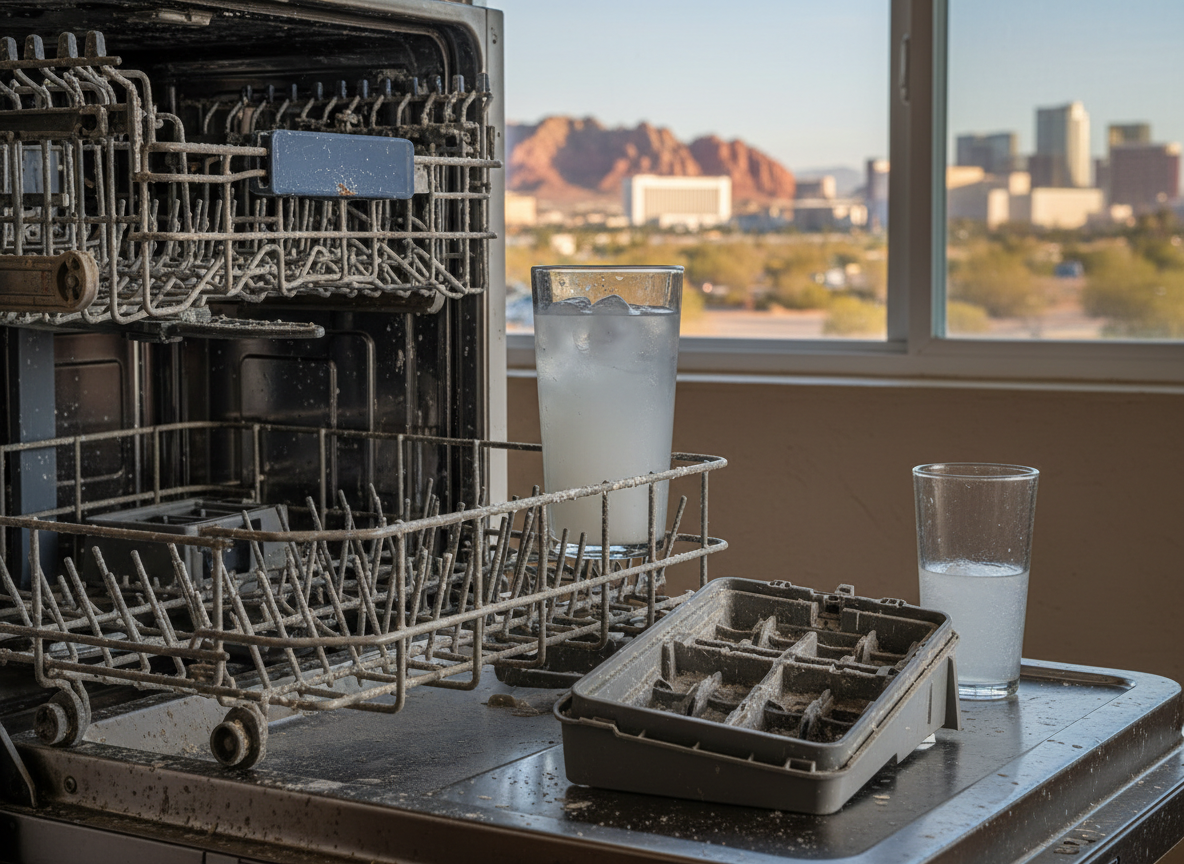
Southern Nevada hard water typically forces dishwashers and ice makers into repair rather than replacement when scaling is caught before valves or pumps fail completely. Mineral deposits from local water supplies coat inlet valves, spray arms, and ice maker molds within a few years, yet targeted cleaning restores function in many units serving homes from Summerlin to Henderson.
Hard Water Scaling in Local Appliances
Southern Nevada water leaves behind calcium and magnesium that accumulate on dishwasher inlet valves and refrigerator ice maker lines. These deposits restrict flow, cause incomplete cycles, and produce cloudy glassware or hollow ice cubes. In neighborhoods such as Enterprise and Spring Valley, residents notice slower fill times after roughly three years of daily use. The same minerals affect built-in refrigerators common in Summerlin, where French-door models rely on consistent water pressure for ice production. Dust from desert conditions adds to the problem by settling on coils that must work harder when water flow is already restricted. Regular attention to these components prevents the need for full appliance swaps in many cases.
Safe Maintenance Steps Homeowners Can Perform
Homeowners can safely clean condenser coils on refrigerators every three months using a vacuum attachment to remove dust that compounds hard-water strain. Leveling the unit with a carpenter's level keeps doors sealing properly and prevents added stress on ice maker components. For dishwashers, running an empty cycle with a cup of white vinegar once a month helps loosen early scale on spray arms and filters. Checking and rinsing the inlet screen behind the lower kickplate removes debris before it reaches valves. Refrigerator water filters should be replaced according to the manufacturer's interval, typically every six months, to reduce mineral passage into ice makers. These steps focus on accessible areas and avoid electrical or gas connections.
Warning Signs That Require Attention
Persistent cloudy dishes after a full cycle often signals scale on dishwasher spray arms or the inlet valve. Ice makers that produce small or misshapen cubes indicate restricted water flow from scaled lines. Dishwashers that stop mid-cycle or leave standing water point to partial blockages in the drain or fill components. Unusual grinding sounds during the fill phase of either appliance suggest valves struggling against mineral buildup. When these signs appear together with longer cycle times, further DIY attempts risk worsening the issue and an independent local technician should evaluate the unit.
Repair or Replace Decisions for Scaled Units
Units showing isolated valve scaling can often be restored through descaling and part replacement rather than full replacement. When multiple components such as pumps and heating elements are also affected, the balance shifts toward replacement, especially for appliances already past seven years of service. The same logic applies to ice makers integrated in French-door or built-in refrigerators common across Henderson and the Arts District. For guidance on similar age-based choices with refrigerators under desert conditions, see the related article on deciding whether to repair or replace. Linking to specialized dishwasher repair or ice maker repair pages helps homeowners locate targeted assessment when internal scaling has progressed beyond basic maintenance.
When to Call an Independent Local Technician
Persistent issues after vinegar cycles and filter changes indicate scale has moved past homeowner-accessible parts. At that point, contacting Nationwide Appliance Repair connects callers with an independent local technician who can inspect valves, pumps, and ice maker molds specific to Southern Nevada water conditions. Technicians familiar with stackable laundry setups in condos and built-in models in Centennial Hills bring the right tools for safe disassembly. Early intervention at the first clear warning signs prevents secondary damage to related components and keeps appliances operating within normal temperature ranges such as 37-40°F for refrigerators and 0°F for freezers.