2026-11-19 ·
Why Your Dryer Takes Two Cycles: Lint, Vents and Desert Dust
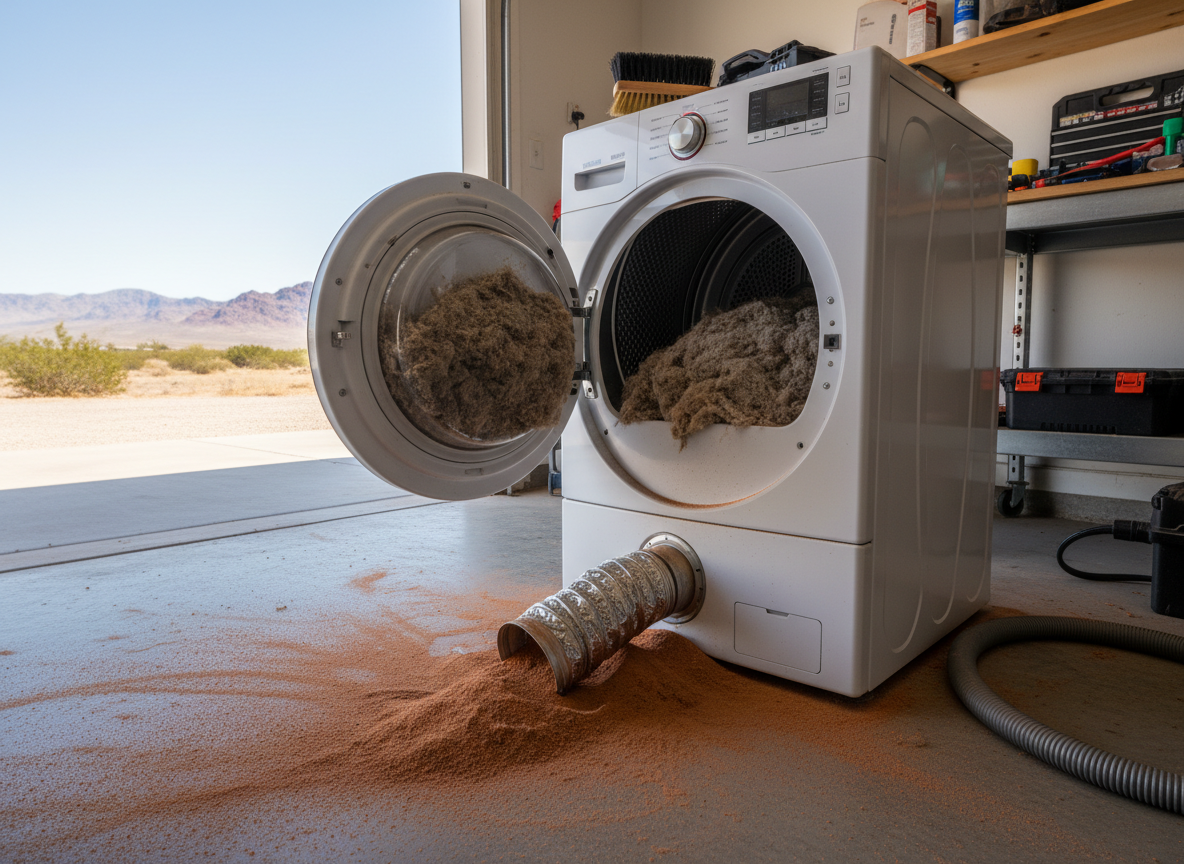
A dryer that takes two full cycles usually results from restricted airflow caused by lint accumulation inside the machine and along the vent path, a frequent issue for homes in Las Vegas, Summerlin and Henderson where desert dust adds to the problem.
Lint Buildup and Restricted Airflow
Lint collects on the lint trap, inside the drum housing and along the exhaust duct, reducing the volume of air that can move through the system. When airflow drops, moisture stays in the clothes longer and the machine extends run time to reach the selected dryness level. In stackable units common in Downtown Las Vegas condos and Arts District apartments, the shorter vent runs still trap lint quickly because bends and connections create catch points. Over weeks of daily loads the restriction grows until the dryer senses the clothes are not dry and restarts the cycle. Regular removal of the trap after every load and monthly vacuuming of the housing behind the trap keep the primary path open. Checking the exterior vent flap for free movement also prevents back pressure that forces longer operation.
Desert Dust Impact on Vents
Fine dust from the Mojave environment settles on condenser coils in the dryer and on the exterior vent screen, compounding the lint layer already present. In neighborhoods such as Spring Valley and Sunrise Manor, wind carries extra particles that pass through open windows and attach to damp laundry before it reaches the machine. The added grit narrows the vent diameter and raises internal temperatures, triggering safety thermostats that pause the cycle. Homeowners in Centennial Hills and Lone Mountain with longer exterior runs see the effect sooner because dust has more surface area to coat. Clearing the exterior vent screen every two weeks and using a shop vacuum with a crevice tool on the first three feet of duct reduces the dust load without disassembling the full line.
Steps Homeowners Can Take to Clean Filters and Vents
Begin by unplugging the dryer and pulling it away from the wall. Remove the lint trap and use a vacuum attachment to reach the cavity beneath it. Disconnect the flexible or rigid duct at both ends and shake out loose material, then run a vent brush or leaf blower through the line from the exterior opening inward. Reattach the duct with a metal clamp rather than tape so the seal remains secure. For stackable washer dryer repair situations, confirm the short duct run has no kinks that trap debris. Level the machine by adjusting the front feet so the drum turns without rubbing the housing, which can create extra lint. These steps restore normal cycle times in many cases and can be repeated every three months during peak summer heat.
Recognizing When Professional Help Is Needed
Persistent two-cycle drying after cleaning the trap, housing and exterior vent indicates a deeper obstruction or failing component such as a weak exhaust fan. Burning smells, excessive heat on the cabinet or error codes on the control panel are additional signals that internal parts require inspection. An independent local technician can scope the full vent length, test airflow with a manometer and replace worn seals or the blower wheel. When the unit is more than ten years old and already shows multiple symptoms, the same technician can discuss whether continued repair makes sense versus replacement. Readers facing repeated issues may also want to review related guidance in Hard Water, Dishwashers and Ice Makers: A Southern Nevada Guide for broader appliance care in the region.
Connecting with Local Repair Options
Homeowners ready for expert assessment can request a referral through Nationwide Appliance Repair for washer and dryer repair or dryer not heating repair. The service connects callers with independent local technicians who serve Las Vegas, Henderson, North Las Vegas and surrounding areas. Technicians arrive with tools to handle vent cleaning beyond homeowner reach, electrical checks and part replacement on major brands. Providing the model number and a description of the two-cycle symptom helps the technician prepare before the visit. After the call, the homeowner discusses next steps directly with the technician based on the inspection findings.